Your One tailed vs two tailed hypothesis examples images are available. One tailed vs two tailed hypothesis examples are a topic that is being searched for and liked by netizens now. You can Get the One tailed vs two tailed hypothesis examples files here. Find and Download all royalty-free photos and vectors.
If you’re searching for one tailed vs two tailed hypothesis examples pictures information linked to the one tailed vs two tailed hypothesis examples interest, you have visit the ideal site. Our website always gives you suggestions for viewing the maximum quality video and image content, please kindly surf and find more informative video articles and images that fit your interests.
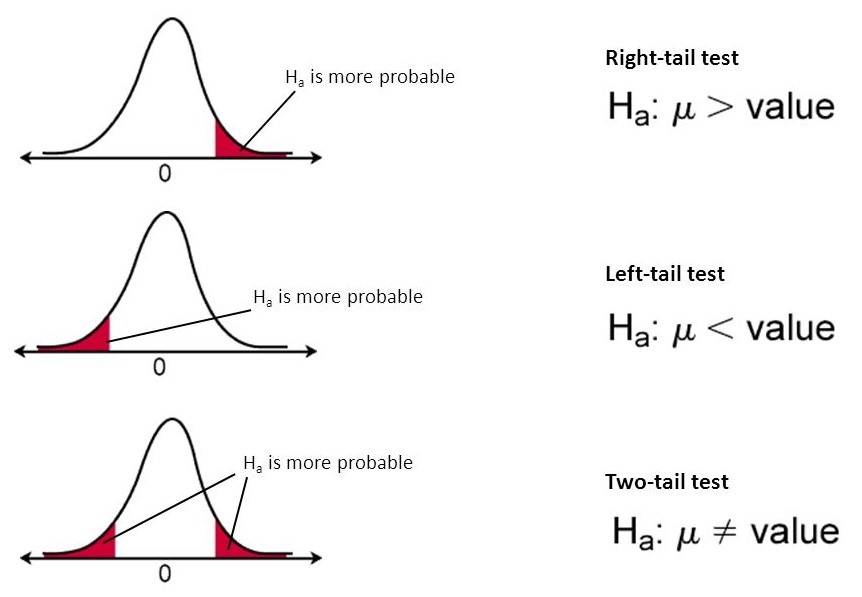
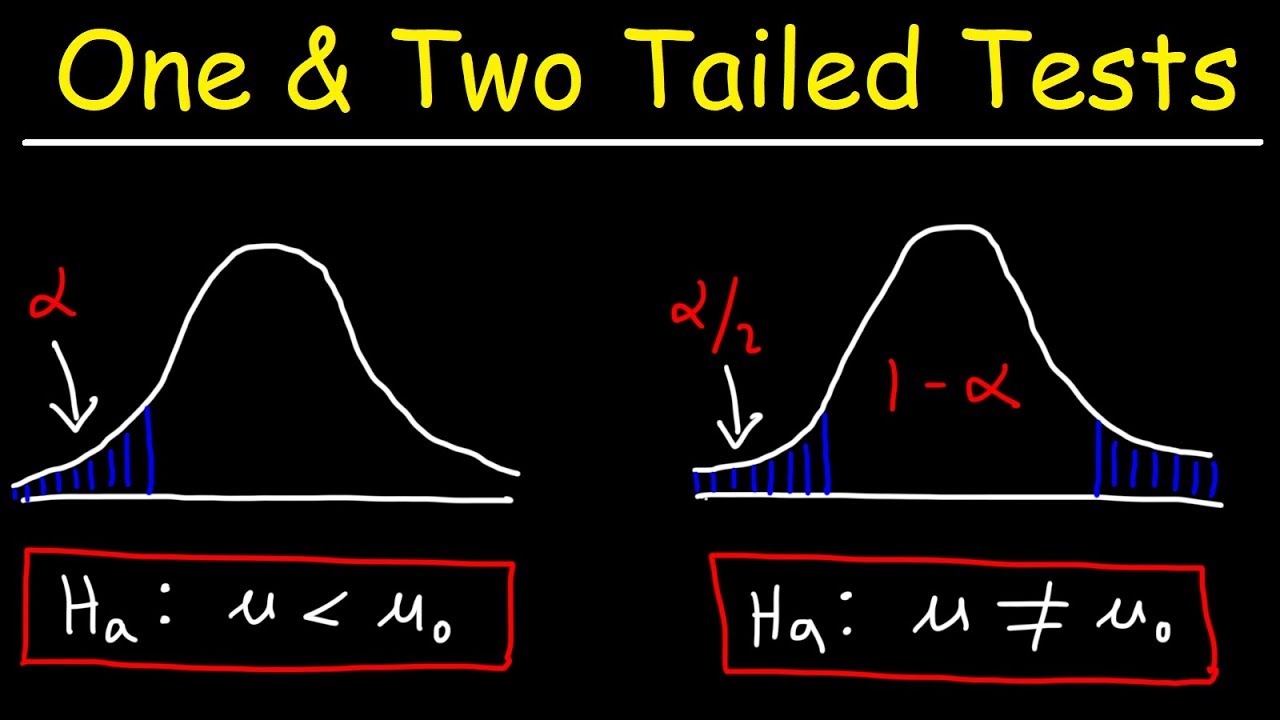
One Tailed Vs Two Tailed Hypothesis Examples. One-and two-tailed hypothesis tests. In this example the two-tailed p-value suggests rejecting the null hypothesis of no difference. When a hypothesis test is set up to show that the sample mean would be higher or lower than the population mean this is referred to as a one-tailed test. The main advantage of using a one-tailed test is that it has more statistical power than a two-tailed test at the same significance alpha level.
 Difference Between One Tail Test And Two Tail Test From The Genesis From fromthegenesis.com
For example a two-tailed 2-sample t-test can determine whether the difference between group 1 and group 2 is statistically significant in either the positive or negative direction. With Python use the scipy and math libraries to calculate the P-value for a two-tailed tailed hypothesis test for a proportion. We did something called a two-tailed test. A one-tailed test also known as a directional hypothesis is a test of significance to determine if there is a relationship between the variables in one directionA one-tailed test is useful if you have a. It is a non-directional hypothesis. At eTail West one wise retailer told the audience 80 of what you think you know about your site is wrong.
One-and two-tailed hypothesis tests.
This is called eight two-tailed test. They said this back in 2015 but it still holds true today. A one-tailed test also known as a directional hypothesis is a test of significance to determine if there is a relationship between the variables in one directionA one-tailed test is useful if you have a. So we were dealing with kind of. This is called eight two-tailed test. Lets dive deeper into the differences between the two variants of a test and show some examples in Python.
 Source: statisticstechs.weebly.com
In the field of research and experiments it pays to know the difference between one-tailed and two-tailed test as they. In other words your results are more likely to be significant for a one-tailed test if there truly is a difference between the groups in the direction that you have predicted. So we were dealing with kind of. Just keep in mind that the distinction can arise up in many different situations. Directional hypothesis an alternative hypothesis in which the researcher predicts the direction of the expected difference between the groups.
 Source: studylib.net
Source: studylib.net
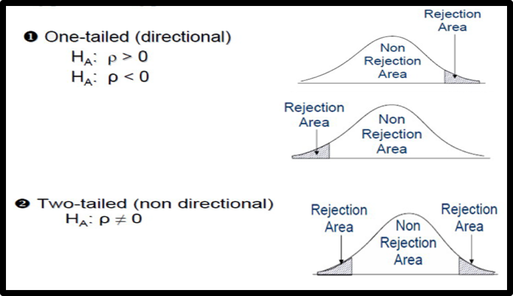
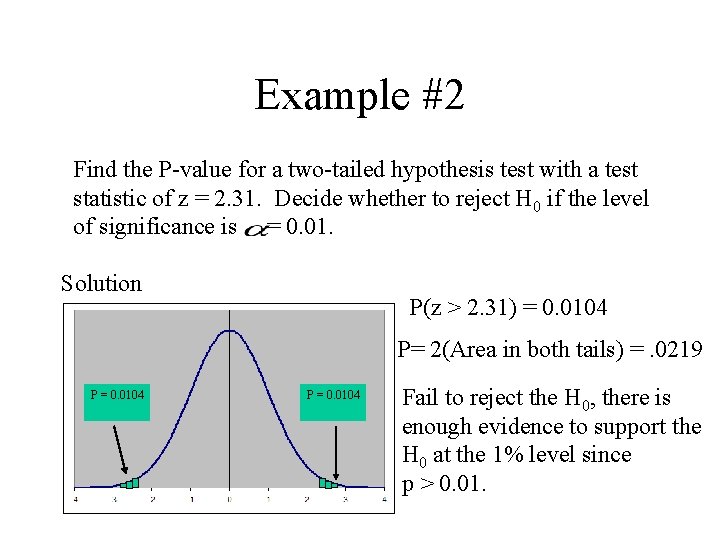
The region of rejection can be either left or right. With Python use the scipy and math libraries to calculate the P-value for a two-tailed tailed hypothesis test for a proportion. In a two-tailed test the alternative hypothesis has two ends. In a test there are two divisions of probability density curve ie. One-and two-tailed hypothesis tests.
 Source: stats.stackexchange.com
In the field of research and experiments it pays to know the difference between one-tailed and two-tailed test as they. A one-tailed hypothesis is simply one that specifies the direction of a difference or correlation while a two-tailed hypothesis is one that does not. A one-tailed test also known as a directional hypothesis is a test of significance to determine if there is a relationship between the variables. Because frankly a super high response time if you had a response time that was more than 3 standard deviations that wouldve also made us likely to reject the null hypothesis. Just keep in mind that the distinction can arise up in many different situations.
 Source: cliffsnotes.com
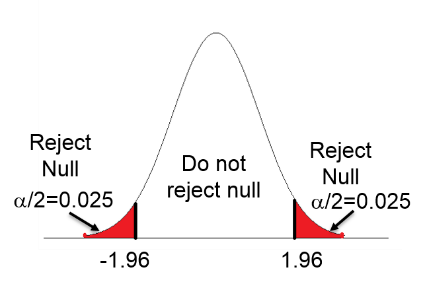
A two-tailed test is one that can test for differences in both directions. A two-tailed test also known as a non directional hypothesis is the standard test of significance to determine if there is. The region of rejection is called as a critical region. The region of rejection can be either left or right. One-and two-tailed hypothesis tests.
 Source: sphweb.bumc.bu.edu
The region of rejection is called as a critical region. For example if we correlate income with years of schooling we might hypothesize that years of schooling tend to increase with income. Two-tailed test distinction in the context of a t-test. Region of acceptance and region of rejection. His message was one among many ways digital marketers urged their audiences to test and test often.
 Source: study.com
We did something called a two-tailed test. Just keep in mind that the distinction can arise up in many different situations. In this example the two-tailed p-value suggests rejecting the null hypothesis of no difference. When a hypothesis test is set up to show that the sample mean would be higher or lower than the population mean this is referred to as a one-tailed test. Region of rejection can be both left as well as right.
 Source: quora.com
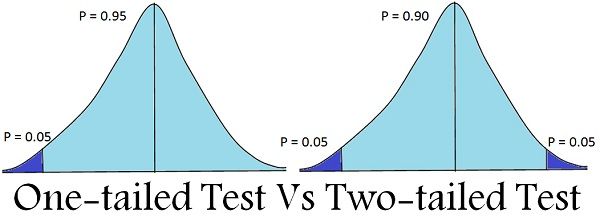
For example if we correlate income with years of schooling we might hypothesize that years of schooling tend to increase with income. Region of acceptance and region of rejection. I m studying for my Business class and need an explanation. So we were dealing with kind of. Figure 1Comparison of a a twotailed test and b a onetailed test at the same probability level 95 percent.
 Source: statisticsbyjim.com
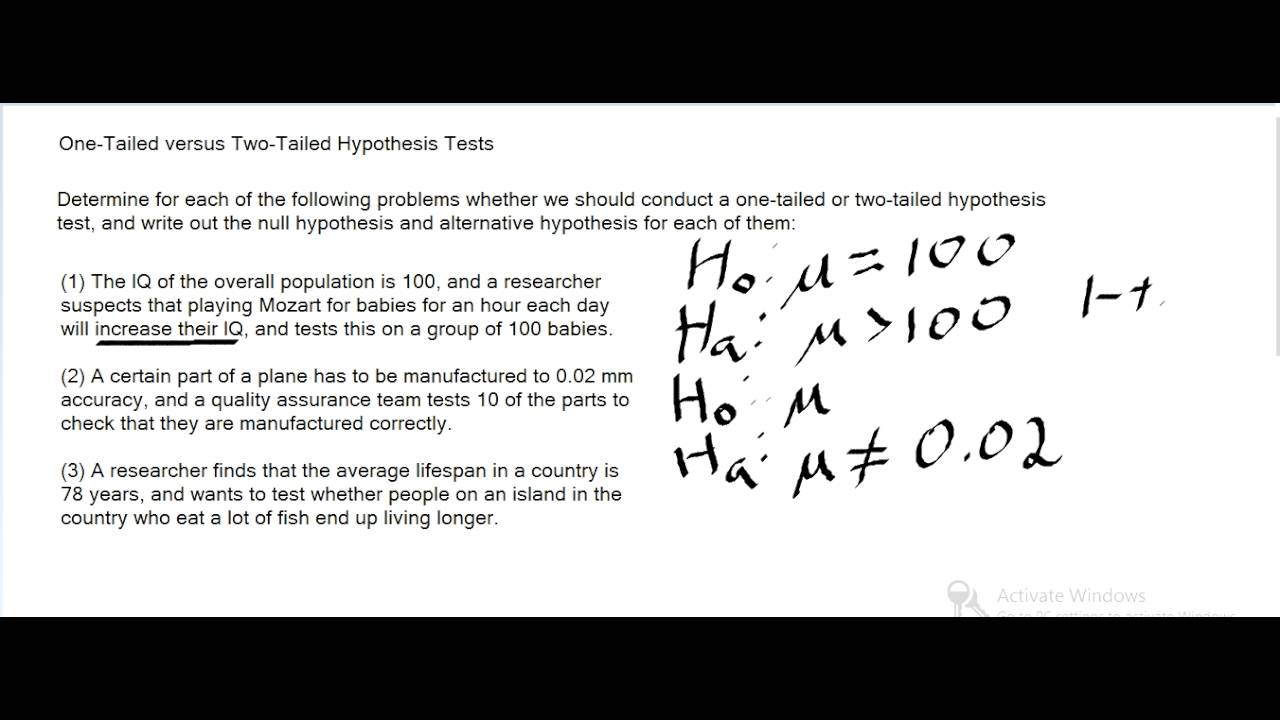
A non-directional two-tailed hypothesis predicts that the independent variable will have an effect on the dependent variable but the direction of the effect is not specified. In the previous example only a sample mean much lower than the population mean would have led to the rejection of the null hypothesis. To test the hypothesis test statistics is required which follows a known distribution. Terms in this set 4 one-tailed hypothesis. We did something called a two-tailed test.
 Source: youtube.com
So depending on the direction of the one-tailed hypothesis its p-value is either 05two-tailed p-value or 1-05two-tailed p-value if the test statistic symmetrically distributed about zero. At eTail West one wise retailer told the audience 80 of what you think you know about your site is wrong. Write a 1000-word paper in which you define how hypothesis testing and its usefulness. The Difference Between One-Tailed and Two-Tailed Testing. Lets dive deeper into the differences between the two variants of a test and show some examples in Python.
Source: fromthegenesis.com
This is called eight two-tailed test. It is a directional hypothesis. Well examine it one- vs. So depending on the direction of the one-tailed hypothesis its p-value is either 05two-tailed p-value or 1-05two-tailed p-value if the test statistic symmetrically distributed about zero. So we were dealing with kind of.
 Source: youtube.com
A one-tailed hypothesis is simply one that specifies the direction of a difference or correlation while a two-tailed hypothesis is one that does not. One-and two-tailed hypothesis tests. Region of rejection can be both left as well as right. We did something called a two-tailed test. Write a 1000-word paper in which you define how hypothesis testing and its usefulness.
 Source: youtube.com
Terms in this set 4 one-tailed hypothesis. A one-tailed hypothesis is simply one that specifies the direction of a difference or correlation while a two-tailed hypothesis is one that does not. That is we set out to evaluate the specific hypothesis that the mean of A is bigger than the mean of B. That is a one-tailed hypothesis because it specifies that. Terms in this set 4 one-tailed hypothesis.
 Source: slidetodoc.com
Because frankly a super high response time if you had a response time that was more than 3 standard deviations that wouldve also made us likely to reject the null hypothesis. For example performing the test at a 5 level means that there is a 5 chance of wrongly rejecting H 0. In other words your results are more likely to be significant for a one-tailed test if there truly is a difference between the groups in the direction that you have predicted. A one-tailed hypothesis is simply one that specifies the direction of a difference or correlation while a two-tailed hypothesis is one that does not. The region of rejection is called as a critical region.
 Source: slideplayer.com
In a two-tailed test the alternative hypothesis has two ends. It is a non-directional hypothesis. A non-directional two-tailed hypothesis predicts that the independent variable will have an effect on the dependent variable but the direction of the effect is not specified. That is we set out to evaluate the specific hypothesis that the mean of A is bigger than the mean of B. Lets assume we have selected 005 or 5 as our significance level.
 Source: youtube.com
Differences Examples - Quiz Worksheet Chapter 14 Lesson 4 Transcript. It is a directional hypothesis. In the field of research and experiments it pays to know the difference between one-tailed and two-tailed test as they. We did something called a two-tailed test. To test the hypothesis test statistics is required which follows a known distribution.
 Source: slideshare.net
Source: slideshare.net
Figure 1Comparison of a a twotailed test and b a onetailed test at the same probability level 95 percent. That is a one-tailed hypothesis because it specifies that. In a test there are two divisions of probability density curve ie. It just states that there will be a difference. In one tailed tests alternative hypotheses have only one end.
 Source: investopedia.com
The main advantage of using a one-tailed test is that it has more statistical power than a two-tailed test at the same significance alpha level. It just states that there will be a difference. For example if we correlate income with years of schooling we might hypothesize that years of schooling tend to increase with income. Here the sample size is 100 the occurences are 10 and the test is for a proportion different from than 050. Directional hypothesis an alternative hypothesis in which the researcher predicts the direction of the expected difference between the groups.
 Source: keydifferences.com
With Python use the scipy and math libraries to calculate the P-value for a two-tailed tailed hypothesis test for a proportion. I m studying for my Business class and need an explanation. So depending on the direction of the one-tailed hypothesis its p-value is either 05two-tailed p-value or 1-05two-tailed p-value if the test statistic symmetrically distributed about zero. Lets dive deeper into the differences between the two variants of a test and show some examples in Python. To test the hypothesis test statistics is required which follows a known distribution.
This site is an open community for users to submit their favorite wallpapers on the internet, all images or pictures in this website are for personal wallpaper use only, it is stricly prohibited to use this wallpaper for commercial purposes, if you are the author and find this image is shared without your permission, please kindly raise a DMCA report to Us.
If you find this site convienient, please support us by sharing this posts to your favorite social media accounts like Facebook, Instagram and so on or you can also bookmark this blog page with the title one tailed vs two tailed hypothesis examples by using Ctrl + D for devices a laptop with a Windows operating system or Command + D for laptops with an Apple operating system. If you use a smartphone, you can also use the drawer menu of the browser you are using. Whether it’s a Windows, Mac, iOS or Android operating system, you will still be able to bookmark this website.


